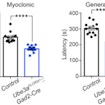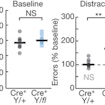
Guoping Feng and Michael Halassa create mice with global or thalamic-specific loss of the ASD-risk gene PTCHD1 to show specific roles for thalamic PTCHD1 in ASD-like behaviors.
Highlights of SFARI-funded papers, selected by the SFARI science team.

Guoping Feng and Michael Halassa create mice with global or thalamic-specific loss of the ASD-risk gene PTCHD1 to show specific roles for thalamic PTCHD1 in ASD-like behaviors.

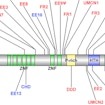
By comparing phenotypes in 25 individuals with de novo mutations in POGZ with SSC ASD phenotypic data, Evan Eichler uncovers a distinct POGZ-ASD clinical subtype.

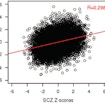
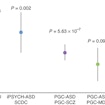
Mark Daly compares genetic data of social and communication difficulties in healthy individuals with ASD genetic data to show how risk variants lead to a behavioral continuum.

Dan Littman and colleagues use a mouse maternal immune activation (MIA) model to dissect immune pathways linking MIA with autism risk.

Using SHANK3 conditional knock-in mice, Guoping Feng shows that adult re-expression of SHANK3 improves cellular and behavioral abnormalities, including ASD-like deficits.

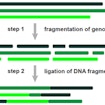
James Gusella and Michael Talkowski develop a CRISPR/CAS9 genomic method to generate microdeletions and microduplications in human iPSCs that mirror human CNV genetics.

The Autism Inpatient Collection, directed by Matthew Siegel, enrolls individuals severely affected by autism, facilitating assessment of this under-represented group.

Evan Eichler compares whole-genome and whole exome sequencing data of ASD indivduals and finds an enrichment of variants in putative noncoding regulatory elements in ASD.