Dan Arking compares large-scale transcriptome datasets from neurotypical individuals and those with autism, schizophrenia and bipolar disorder.
Highlights of SFARI-funded papers, selected by the SFARI science team.

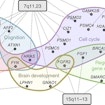
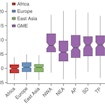
Dan Arking compares large-scale transcriptome datasets from neurotypical individuals and those with autism, schizophrenia and bipolar disorder.

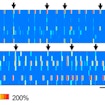
Michael Wigler and Dan Levy develop a new fragmentation and sequencing method for CNV analysis that generates high-resolution CNV data at lower cost than traditional analyses.

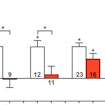
Benjamin Philpot shows that seizure susceptibility in an Angelman syndrome mouse model results from the specific loss of UBE3A from GABAergic, but not glutamatergic, neurons.

Simons Center for Data Analysis scientist Richard Bonneau develops a method to assess disease gene variants that combines sequence analysis and protein structural modeling.

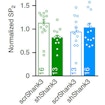
Guoping Feng and Michael Halassa create mice with global or thalamic-specific loss of the ASD-risk gene PTCHD1 to show specific roles for thalamic PTCHD1 in ASD-like behaviors.

By comparing phenotypes in 25 individuals with de novo mutations in POGZ with SSC ASD phenotypic data, Evan Eichler uncovers a distinct POGZ-ASD clinical subtype.

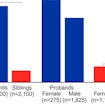
Mark Daly compares genetic data of social and communication difficulties in healthy individuals with ASD genetic data to show how risk variants lead to a behavioral continuum.

Dan Littman and colleagues use a mouse maternal immune activation (MIA) model to dissect immune pathways linking MIA with autism risk.