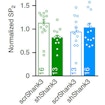
A role for SHANK3 in social reward
Christian Luscher and Camilla Bellone show that ASD- model mice with reduced SHANK3 in the VTA have altered excitatory synapse transmission and impaired social behaviors.
Christian Luscher and Camilla Bellone show that ASD- model mice with reduced SHANK3 in the VTA have altered excitatory synapse transmission and impaired social behaviors.
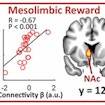
Using fMRI in typically developing children, Vinod Menon finds one’s mother’s voice activates a network of brain regions predictive of a child’s social communication skills.
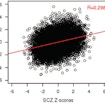
Dan Arking compares large-scale transcriptome datasets from neurotypical individuals and those with autism, schizophrenia and bipolar disorder.

SFARI’s deputy scientific director, John Spiro, outlines two important changes that have been implemented in light of SFARI’s support for preprints of life science research findings. SFARI Investigators are encouraged to post preprints on recognized servers ahead of publication in a peer-reviewed journal. In addition, the SFARI biosketch form has been updated to include space for grant applicants to list manuscripts deposited in preprint servers. SFARI hopes that these changes will help to accelerate the pace of autism research.
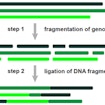
Michael Wigler and Dan Levy develop a new fragmentation and sequencing method for CNV analysis that generates high-resolution CNV data at lower cost than traditional analyses.
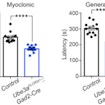
Benjamin Philpot shows that seizure susceptibility in an Angelman syndrome mouse model results from the specific loss of UBE3A from GABAergic, but not glutamatergic, neurons.
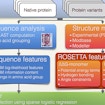
Simons Center for Data Analysis scientist Richard Bonneau develops a method to assess disease gene variants that combines sequence analysis and protein structural modeling.
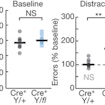
Guoping Feng and Michael Halassa create mice with global or thalamic-specific loss of the ASD-risk gene PTCHD1 to show specific roles for thalamic PTCHD1 in ASD-like behaviors.
SFARI today announced the launch of SPARK, an online research initiative designed to become the largest autism study ever undertaken in the United States. SPARK will collect information and DNA for genetic analysis from 50,000 individuals with autism — and their families — to advance our understanding of the condition’s causes and accelerate the development of new treatments and supports.
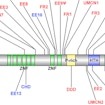
By comparing phenotypes in 25 individuals with de novo mutations in POGZ with SSC ASD phenotypic data, Evan Eichler uncovers a distinct POGZ-ASD clinical subtype.