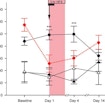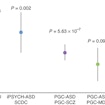
Mark Daly compares genetic data of social and communication difficulties in healthy individuals with ASD genetic data to show how risk variants lead to a behavioral continuum.


Mark Daly compares genetic data of social and communication difficulties in healthy individuals with ASD genetic data to show how risk variants lead to a behavioral continuum.
SFARI is pleased to announce that it has selected six finalists in response to the Bridge to Independence Award request for applications. This new awards program is intended to invest in the next generation of top autism investigators by identifying talented early-career scientists and facilitating their transition to an independent research career.

Whole-exome sequencing and associated phenotypic data from the Simons Simplex Collection (SSC) are now accessible via WuXi NextCODE’s cloud-based database. This new platform allows researchers to view and analyze the data online and alongside other datasets, without needing to move or download the data files.

Dan Littman and colleagues use a mouse maternal immune activation (MIA) model to dissect immune pathways linking MIA with autism risk.

Using SHANK3 conditional knock-in mice, Guoping Feng shows that adult re-expression of SHANK3 improves cellular and behavioral abnormalities, including ASD-like deficits.

James Gusella and Michael Talkowski develop a CRISPR/CAS9 genomic method to generate microdeletions and microduplications in human iPSCs that mirror human CNV genetics.

The Autism Inpatient Collection, directed by Matthew Siegel, enrolls individuals severely affected by autism, facilitating assessment of this under-represented group.

Evan Eichler compares whole-genome and whole exome sequencing data of ASD indivduals and finds an enrichment of variants in putative noncoding regulatory elements in ASD.

Sandeep Robert Datta describes a combined 3D computer vision/machine-learning method that identifies behavioral modules expressed by freely behaving mice.

Irving Reti assesses, in two ASD mouse models, the utility of targeted, subthalamic nucleus, deep brain stimulation to treat severe forms of self-injurious behavior.