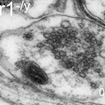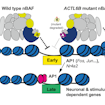
Benjamin Blencowe and colleagues defined the functional roles of microexons in genes encoding translation initiation factors, linking them to altered translation, synaptic plasticity and behavior.
Highlights of SFARI-funded papers, selected by the SFARI science team.

Benjamin Blencowe and colleagues defined the functional roles of microexons in genes encoding translation initiation factors, linking them to altered translation, synaptic plasticity and behavior.

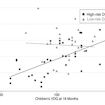
Eric Morrow, Stephen Sheinkopf and colleagues reported the characteristics of the first 1,000 participants in the RI-CART study, a population-based cohort of individuals with autism in Rhode Island.

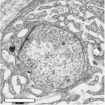
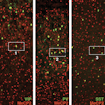
Genevieve Konopka and colleagues reported important roles for Foxp1 in particular subclasses of the spiny projection neurons in the striatum, with downstream effects on striatal-dependent circuits and behaviors.

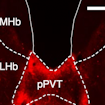
Garret Stuber and colleagues used in vivo calcium imaging to show that a population of oxytocin-positive (OT) neurons in the paraventricular nucleus of the hypothalamus responds preferentially to social stimuli and is necessary for regulating social behavior. Reduced number of OT neurons was associated with social deficits in Shank3b KO mice.

Michael Piper and colleagues confirmed and extended the association of USP9X loss-of-function mutations with a neurodevelopmental syndrome in both sexes, driven by changes in multiple signaling pathways.

Joseph Buxbaum and colleagues in the Autism Sequencing Consortium reported the largest exome sequencing study of ASD to date, identifying 102 risk genes at a false discovery rate of 0.1 or less.

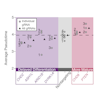
Gina Turrigiano and colleagues showed that loss of Shank3 disrupts homeostatic plasticity and that this deficit can be rescued by the mood-stabilizing drug lithium (Li+).

Alex Kwan and colleagues used in vivo calcium imaging to show that a mutation in Shank3 associated with schizophrenia affects the activity of inhibitory neurons in the cortex, ultimately leading to enhanced activity of excitatory neurons and altered behavior in mice.