Catharine Rankin, Kurt Haas, Paul Pavlidis and colleagues used machine vision to find that mutations linked to ASD risk genes are associated with changes in habituation of response probability in C. elegans
Highlights of SFARI-funded papers, selected by the SFARI science team.

Catharine Rankin, Kurt Haas, Paul Pavlidis and colleagues used machine vision to find that mutations linked to ASD risk genes are associated with changes in habituation of response probability in C. elegans

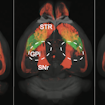
David Sulzer and colleagues used conditional knockout mice of Atg7, a protein involved in autophagy, to study the effects of loss of autophagy on the structure and function of striatal spiny projection neurons, as well as on behaviors relevant to ASD.

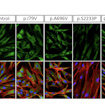
Nael Nadif Kasri and colleagues used micro-electrode array assays to demonstrate common neuronal network phenotypes associated with genes underlying Kleefstra spectrum syndrome.

Joseph Gleeson and colleagues used deep whole-genome sequencing and genotyping of sperm DNA to stratify ASD risk in offspring due to de novo mutation.

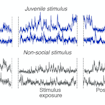
Ofer Yizhar and colleagues described the altered dynamics of social representation in neurons of the medial prefrontal cortex of Cntnap2-null mice, a model of autism spectrum disorder.

Gloria Choi, Jun Huh and colleagues showed that postnatal administration of IL-17a can rescue some of the anatomical and behavioral deficits observed in a maternal immune activation (MIA) mouse model of autism spectrum disorder.

Michael Halassa, Guoping Feng and colleagues identified a combinatorial strategy to reverse noise hypersensitivity in Ptchd1 knockout mice, while Stephen Scherer, James Ellis and colleagues separately explored the genetic and functional complexity of PTCHD1 in humans.

Mark Daly and colleagues used an exome sequencing data set of ASD and ADHD to identify a similar profile of rare protein-truncating variants in each disorder.