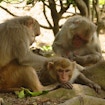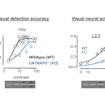
Pawan Sinha and colleagues found that sensory habituation is reduced in autism, and furthermore, that this reduction correlates with behavioral assessments of social communication and sensory difficulties.
Highlights of SFARI-funded papers, selected by the SFARI science team.

Pawan Sinha and colleagues found that sensory habituation is reduced in autism, and furthermore, that this reduction correlates with behavioral assessments of social communication and sensory difficulties.

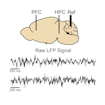
Vikaas Sohal and John Rubenstein found that Pogz heterozygous mice exhibited reduced anxiety-related avoidance behavior and that this correlated with impaired communication between the ventral hippocampus and medial prefrontal cortex.

Vanessa Troiani and colleagues demonstrated a linear relationship between pupil dilation, reward/punishment sensitivity and individual ASD diagnostic status.

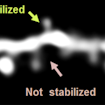
Robi Mitra and colleagues have developed a scalable CRISPR/Cas9 RNA sequencing assay in a human neuronal differentiation cell model, enabling high-throughput assessments of how repression of ASD risk genes affects transcription and neuronal differentiation.

Elizabeth Jonas and colleagues identified a molecular mechanism underlying the contributions of mitochondrial dysfunction to the synaptic and behavioral features associated with fragile X syndrome.

Hirofumi Morishita and colleagues showed that juvenile social isolation leads to deficits in adult mouse sociability via reduced activation of a prefrontal-paraventricular thalamus circuit.

Stefano Panzeri and colleagues used neuroimaging-derived measures to assess the sex differential impact of excitation/inhibition imbalance in idiopathic ASD.

Graeme Davis and colleagues showed that ASD risk genes genetically interact with a class of common modifiers of presynaptic homeostatic plasticity at the Drosophila neuromuscular junction.