
2021 SFARI Human Cognitive and Behavioral Science awardees announced
SFARI is pleased to announce that it intends to award 11 grants in response to the 2021 Human Cognitive and Behavioral Science request for applications.
SFARI is pleased to announce that it intends to award 11 grants in response to the 2021 Human Cognitive and Behavioral Science request for applications.

Researchers interested in requesting brain tissue from Autism BrainNet can now submit their applications through SFARI Base, SFARI’s clearinghouse for autism and autism-related research data and biospecimens.
SFARI is pleased to announce that it intends to fund five collaborative groups in response to the 2020 SFARI Collaboration on Sex Differences in Autism request for applications.
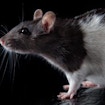
On April 26 and 29, 2021, SFARI and the Simons Initiative for the Developing Brain hosted a virtual workshop that focused on the use of rats as a model system for autism spectrum disorder. The workshop discussed advantages and limitations of using rat models, evaluated the need for cross-species studies and considered strategies to move the field forward.
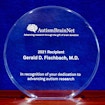
SFARI announces the recipients of the Autism BrainNet Appreciation Award, a new honor that recognizes outstanding partners and collaborators for their dedication to advancing brain tissue research in autism.

On July 29, 2020, SFARI convened an online workshop to explore environmental (maternal and fetal) risk factors for autism spectrum disorder in the context of COVID-19 infection.
On May 21, 2019, the recipients of the SFARI Bridge to Independence Award gathered at the Simons Foundation to discuss their scientific findings and plans in autism research.
SFARI is pleased to announce that is intends to fund 12 grants in response to the Summer 2019 Pilot Award request for applications.

On April 18, 2019, SFARI brought together autism specialists and child development experts to explore the short-lived yet critical period of infancy. Understanding how cognition, motor skills and language unfold during the earliest developmental stages of life may help detect autism earlier, parse subtypes and inform mechanistic studies in animal models.
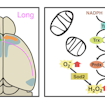
Anthony-Samuel LaMantia, Thomas Maynard and colleagues show that a mouse model of 22q11.2 deletion syndrome has fewer long-distance cortico-cortical connections, which is caused in part by mitochondrial dysfunction.