
Neuroscience 2019: Presentations by SFARI Investigators
SFARI Investigators will give a number of presentations at Neuroscience 2019 in Chicago, IL (October 19–23).
SFARI Investigators will give a number of presentations at Neuroscience 2019 in Chicago, IL (October 19–23).
Findings from the first SPARK genetics study have now been published. The study, which analyzed whole-exome and genome-wide genotyping data from 457 autism families, confirmed known genetic findings and identified new candidate autism risk genes.

New Simons Searchlight data were recently added to SFARI Base. This data release included phenotypic data from individuals with 16p11.2 copy number variants (CNVs), 1q21.1 CNVs and variants in 21 single genes associated with autism and related neurodevelopmental disorders.

The Simons Variation in Individuals Project (Simons VIP) has been recently rebranded as Simons Searchlight. The new name aims to better reflect the program’s mission to build strong partnerships between researchers and families in order to shed light on genetic neurodevelopmental conditions. An updated website, improved registration process and more resources are also available, including new opportunities for individuals with a genetic diagnosis to join Simons Searchlight.
This issue of the SFARI newsletter includes: (1) 2019 Research awardees, (2) SFARI Gene: New data release, (3) Workshop plumbs infancy for autism insights, (4) A Conversation with SFARI Investigator Dan Feldman, (5) Highlights of SFARI-funded research, (6) 2019 Bridge to Independence Award – Request for applications, (7) Winter 2020 Pilot Award – Request for applications, (8) Past webinar: “SFARI Viewer – an online platform to visualize and analyze SFARI genomic data”.

On April 18, 2019, SFARI brought together autism specialists and child development experts to explore the short-lived yet critical period of infancy. Understanding how cognition, motor skills and language unfold during the earliest developmental stages of life may help detect autism earlier, parse subtypes and inform mechanistic studies in animal models.
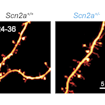
Kevin Bender, Stephan Sanders and colleagues show that there is an unexpectedly critical role for the autism risk gene Scn2a, which encodes the sodium channel NaV1.2, in postnatal dendritic excitability and synaptic function in mice.
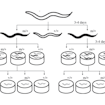
Paul Sternberg and colleagues establish an initial pipeline in C. elegans to screen autism-associated missense mutations for functional effects.
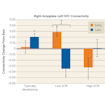
Susan Bookheimer and colleagues show that the degree of sensory overresponsivity in individuals with autism may be driven by distinct patterns of connectivity between the prefrontal cortex and amygdala.

SFARI Investigator Dan Feldman discusses the E-I ratio hypothesis in autism and his lab’s recent studies that aimed to test it.