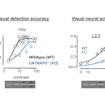
Simon Chen and colleagues found that a reduction in locus-coeruleus noradrenaline neuromodulatory signaling contributes to altered motor learning in 16p11.2 deletion mice.
jesse

Autism BrainNet is working to digitize the Autism Celloidin Library, a unique collection of 28 celloidin-embedded, Nissl-stained brains from donors with and without autism spectrum disorder. The collection provides a unique resource for histological studies aimed at quantifying and characterizing changes in cell distribution, size and regional structure. Digitized images will be available to interested researchers upon request.

Three SFARI Investigators (current and past) have recently received prestigious prizes in the natural sciences.

SFARI is pleased to announce that it intends to fund 17 grants in response to the 2021 Genomics of ASD: Pathways to Genetic Therapies request for applications.

Lilia Iakoucheva and colleagues found that mice lacking a copy of the high-confidence ASD risk gene Cul3 have reduced brain volumes, potentially due to defects in Rho signaling during brain development.

Melissa Gymrek and colleagues developed a framework for the identification and prioritization of de novo mutations at tandem repeats on a genome-wide scale and assessed their contribution to autism risk.

A number of presentations will be given by SFARI Investigators at Neuroscience 2021 (November 8–11).

Three SFARI Investigators (current and past) are among this year’s 100 newly elected members of the National Academy of Medicine.

This issue of the SFARI newsletter includes: (1) 2021 SFARI Human Cognitive and Behavioral Science awardees announced, (2) New zebrafish lines added to SFARI resources, (3) ASHG 2021 Virtual Meeting: Presentations by SFARI Investigators and collaborators, (5) A Conversation with SFARI consultant-in-residence Gaspar Taroncher-Oldenburg, (6) Highlights of SFARI-funded research, (7) SFARI Supplement to Enhance Equity and Diversity – Request for applications, (8) SPARK Research Match Diversity, Equity and Inclusivity – Request for applications.
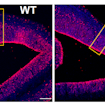
Bilal Haider and colleagues found that Cntnap2 knockout mice exhibited deficits in visual perception and that these were associated with diminished excitation and elevated inhibition in the visual cortex.
- Previous Page
- Viewing
- Next Page