SFARI 2021 Pilot awardees announced
SFARI is pleased to announce that it intends to fund 17 grants in response to the 2021 Pilot Award request for applications.
SFARI is pleased to announce that it intends to fund 17 grants in response to the 2021 Pilot Award request for applications.

Steven Hyman discusses the use of disease model systems to study neuropsychiatric and neurodevelopmental conditions, highlighting their benefits and limitations, and stressing the importance of knowing what questions to address in each system.
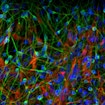
In conjunction with the Nancy Lurie Marks Family Foundation, SFARI is releasing 30 new induced pluripotent stem cell (iPSC) lines for use in autism research.
The ASD-relevance of genes in the SFARI Gene database will be assessed according to a new scoring system called EAGLE (Evaluation of Autism Gene Link Evidence). This metric adds to SFARI Gene’s four ASD-confidence categories to provide an additional tool for assessing a gene’s specific association to ASD rather than neurodevelopmental conditions at large.
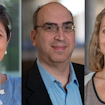
SFARI senior scientist Alan Packer, SPARK director Pamela Feliciano, and former Simons Searchlight outreach manager Misia Kowanda discuss differences and similarities between the ASD gene lists maintained by SFARI, SPARK and Simons Searchlight.

The Bridge to Independence Award program engages talented early-career scientists in autism research by facilitating their transition to research independence and providing grant funding at the start of their professorships at a U.S. or Canadian research institution.
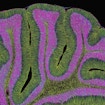
This issue of the SFARI newsletter includes: (1) Analysis of postmortem brain tissue from the Autism BrainNet collection – Request for applications, (2) 2021 Genomics of ASD: Pathways to Genetic Therapies awardees announced, (3) Autism BrainNet to digitize the Autism Celloidin Library of postmortem brains, (4) Neuroscience 2021: Presentations by SFARI Investigators, (5) SFARI Investigators awarded Nobel Prize, Lasker Award and MacArthur Fellowship, (6) Highlights of SFARI-funded research, (7) SFARI Supplement to Enhance Equity and Diversity (SEED) – Request for applications, (8) SPARK Research Match Diversity, Equity and Inclusivity – Request for applications.
The Simons Foundation Autism Research Initiative is pleased to announce the Analysis of postmortem brain tissue from the Autism BrainNet collection — Request for applications (RFA). Grants awarded through this RFA are intended to advance the understanding of autism spectrum disorder through analyses of human postmortem brain tissue donated to the Autism BrainNet collection.
Simon Chen and colleagues found that a reduction in locus-coeruleus noradrenaline neuromodulatory signaling contributes to altered motor learning in 16p11.2 deletion mice.
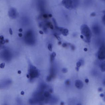
Autism BrainNet is working to digitize the Autism Celloidin Library, a unique collection of 28 celloidin-embedded, Nissl-stained brains from donors with and without autism spectrum disorder. The collection provides a unique resource for histological studies aimed at quantifying and characterizing changes in cell distribution, size and regional structure. Digitized images will be available to interested researchers upon request.