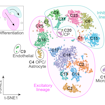
Joseph Buxbaum and colleagues in the Autism Sequencing Consortium reported the largest exome sequencing study of ASD to date, identifying 102 risk genes at a false discovery rate of 0.1 or less.

Joseph Buxbaum and colleagues in the Autism Sequencing Consortium reported the largest exome sequencing study of ASD to date, identifying 102 risk genes at a false discovery rate of 0.1 or less.

SFARI is pleased to announce that it intends to fund eight grants in response to the 2020 Research Award request for applications.

SFARI would like to remind researchers that they can still request many SFARI resources, including genetic and phenotypic data as well as biospecimens, at this time. Researchers can also submit applications to recruit individuals with autism and their families for new research studies.

SFARI Investigators will be giving a number of presentations as part of the 12th FENS Forum of Neuroscience. Due to the COVID-19 pandemic, the forum will be held virtually this year, with live and prerecorded sessions available to conference registrants July 11–15.

The International Society for Autism Research (INSAR) 2020 Annual Meeting to be held May 2020 was canceled, but virtual content is now available online. A selection of abstracts and e-Posters by SFARI Investigators, SFARI staff and collaborators are highlighted here.

On February 6–7, 2020, SFARI convened a two-day workshop to explore the possibility of gene therapies for autism spectrum disorder.

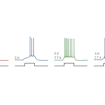
Gina Turrigiano and colleagues showed that loss of Shank3 disrupts homeostatic plasticity and that this deficit can be rescued by the mood-stabilizing drug lithium (Li+).

A SFARI Investigator and a past member of SFARI’s Scientific Advisory Board are among the 146 newly elected members of the National Academy of Sciences.

Three current and former SFARI Investigators and one member of SFARI’s Scientific Advisory Board are among the 276 newly elected members of the American Academy of Arts & Sciences, one of the nation’s oldest and most prestigious honorary societies.

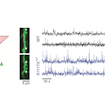
Alex Kwan and colleagues used in vivo calcium imaging to show that a mutation in Shank3 associated with schizophrenia affects the activity of inhibitory neurons in the cortex, ultimately leading to enhanced activity of excitatory neurons and altered behavior in mice.