
A Conversation with SFARI Investigator Liqun Luo
SFARI Investigator Liqun Luo discusses the neurodevelopmental disorder Smith-Magenis syndrome and his lab’s efforts to understand its underlying biology.
SFARI Investigator Liqun Luo discusses the neurodevelopmental disorder Smith-Magenis syndrome and his lab’s efforts to understand its underlying biology.

This issue of the SFARI newsletter includes: (1) SFARI 2016 Bridge to Independence Award finalists announced, (2) SFARI 2016 Explorer awardees announced, (3) Simons Variation in Individuals Project (Simons VIP): New data available, (4) SFARI Gene: New data available, (5) Highlights of SFARI-funded research, (6) Upcoming lecture: Arnold Kriegstein, “Genomic insights into human cortical development and neurodevelopmental disease”, (7) Upcoming lecture: Mark Zylka, “Exploiting genetics to identify environmental risks for autism”.
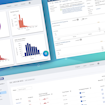
On June 14, 2019, Alistair Ward and Chase Miller will introduce SFARI Viewer and show how this online platform can be used to visualize and analyze genomic and phenotypic data from the SSC and SPARK.
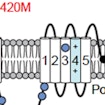
Kevin Bender and Stephan Sanders show that ASD-associated SCN2A variants lead to impaired NaV1.2 channel activity and reduced neuronal excitability.

On February 6–7, 2020, SFARI convened a two-day workshop to explore the possibility of gene therapies for autism spectrum disorder.

The goal of the Pilot Award is to provide early support for exploratory ideas considered higher risk but with the potential for transformative results, particularly those with novel hypotheses for autism. This funding mechanism is particularly suitable for investigators new to the autism field, though we encourage applicants to consult with experts in autism research to ensure their projects are relevant to the human condition. We encourage applications that propose research to link genetic or other ASD risk factors to molecular, cellular, circuit or behavioral mechanisms and set the stage for development of novel interventions, including work in human subjects.
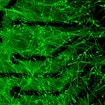
This issue of the SFARI newsletter includes: (1) SFARI 2020 Research awardees, (2) SFARI’s response to appeals for racial justice in science and society, (3) SPARK update: New phenotypic data now available, (4) SFARI Gene: New data release, (5) Requesting SFARI data and biospecimens during COVID-19 pandemic, (6) SFARI abstracts and e-posters at INSAR 2020 Virtual, (7) SFARI Investigator and board member elected to the National Academy of Sciences, (8) SFARI Investigators and board member elected to the American Academy of Arts & Sciences, (9) Workshop report: SFARI workshop explores challenges and opportunities of gene therapies for autism spectrum disorder, (10) Highlights of SFARI-funded research, (11) Past webinar: Allyson Berent, “From parent advocate to nonprofit chief science officer, to biotherapeutic company cofounder — A personal journey through drug development for Angelman syndrome.”
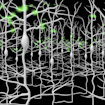
On May 15, 2018, SFARI convened a workshop to revisit the excitation/inhibition (E/I) hypothesis of autism, a synaptic-based account of the disorder that has been highly influential in the last fifteen years of autism research. The workshop critically evaluated the E/I hypothesis in light of the current knowledge of autism pathophysiology and called for a more precise definition of the hypothesis that can help enable translational opportunities from animal- to human-based research.
SFARI today announced the launch of SPARK, an online research initiative designed to become the largest autism study ever undertaken in the United States. SPARK will collect information and DNA for genetic analysis from 50,000 individuals with autism — and their families — to advance our understanding of the condition’s causes and accelerate the development of new treatments and supports.
The SFARI team is pleased to announce the launch of SFARI Gene, a new online tool for autism researchers.