SFARI hosted a virtual workshop on March 14 and 18, 2022, to discuss the best practices for the development and use of induced pluripotent stem (iPS) cell models for autism research, including iPS cells generated from SFARI autism cohorts.

SFARI hosted a virtual workshop on March 14 and 18, 2022, to discuss the best practices for the development and use of induced pluripotent stem (iPS) cell models for autism research, including iPS cells generated from SFARI autism cohorts.

Hiroki Asari is a group leader at the European Molecular Biology Laboratory (EMBL Rome, Italy).

SFARI is pleased to announce that it has selected seven fellows in response to the 2022 Bridge to Independence Award request for applications.

This issue of the SFARI newsletter includes: (1) Analysis of Autism BrainNet postmortem brain tissue RFA: awardees announced, (2) RNA-seq data from Simons Simplex Collection now available, (3) SFARI supports 2022 Summer Undergraduate Research Program, (4) SFARI Investigators elected to the American Academy of Arts and Sciences and National Academy of Sciences in 2022, (5) SFARI workshop explores mitochondrial dysfunction in autism, (6) In search of causality: From neuropsychiatric genetics to pathophysiology, (7) Highlights of SFARI-funded research, (8) 2022 Genomics of ASD: Pathways to Biological Convergence and Genetic Therapies – Request for applications, (9) SFARI Supplement to Enhance Equity and Diversity (SEED) — Request for applications, (10) Webinar: Psychiatric hospitalization for serious emotional and behavioral challenges in autism, (11) Researchers using Simons Searchlight data.
SFARI is pleased to support the Summer Undergraduate Research Program in 2022, working with SFARI Investigators and leading U.S. universities to help provide opportunities for undergraduate students to gain research experience in autism science.

Benjamin Blencowe aims to systematically elucidate the molecular and genetic mechanisms associated with the (mis)regulation and function of a neuronal microexon network frequently disrupted in autism. The methods and datasets generated by the project are expected to provide a framework for future investigations of RNA regulatory networks disrupted in autism as well as in other nervous system disorders and diseases.

Grants awarded through this RFA were intended to improve our understanding of the molecular and cellular consequences of genetic risk for ASD, and to provide a foundation for the development of new therapies. Special emphasis was placed on the use of scalable methods, especially as applied to genes that are suitable targets for genetic therapies.

On March 25 and 28, 2022 SFARI hosted a workshop to explore the role of mitochondria in ASD risk. The workshop brought together experts in mitochondrial research spanning cellular, molecular, genetic, clinical and pharmacological areas and provided points for discussion on how to move this research forward.

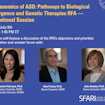
On July 5, 2022, SFARI hosted an informational session on the 2022 Genomics of ASD: Pathways to Biological Convergence and Genetic Therapies request for applications (RFA). The session featured a discussion of the RFA’s objectives and priorities and an opportunity to ask questions with SFARI senior scientists Pamela Feliciano, Alan Packer, and Julia Sommer.