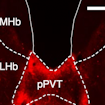
Hirofumi Morishita and colleagues showed that juvenile social isolation leads to deficits in adult mouse sociability via reduced activation of a prefrontal-paraventricular thalamus circuit.

Hirofumi Morishita and colleagues showed that juvenile social isolation leads to deficits in adult mouse sociability via reduced activation of a prefrontal-paraventricular thalamus circuit.

This issue of the SFARI newsletter includes: (1) Updates to SFARI’s 2021 requests for grant applications, (2) SFARI 2020 Director Awards announced, (3) A message from SFARI regarding anti-Asian violence, (4) Simons Searchlight: April 2021 data release, (5) SFARI meeting report: SFARI Fall 2020 science meeting highlights new developments in autism research, (6) A Conversation with SFARI Bridge to Independence Investigator Aakanksha Singhvi, (7) Highlights of SFARI-funded research, (8) 2021 Human Cognitive and Behavioral Science — Request for applications, (9) 2021 Pilot Award — Request for applications, (10) SFARI Supplement to Enhance Equity and Diversity (SEED) — Request for applications, (11) Upcoming lecture: Jake Gratten and Naomi Wray, “New research results from the Australian Autism Biobank Study, (12) Upcoming lecture: Federico Bolognani, Stuart Cobb, Yael Weiss, and Randal Carpenter, “Small molecules, genes and antisense oligonucleotides: Industry perspectives on treatment development for ASD, (13) Upcoming lecture: David Ledbetter, Joseph Buxbaum, and Heather Mefford, “What do we mean by ‘autism risk genes’?”, (14) Past lecture: Elizabeth Berry-Kravis, “Clinical trials and cyclic AMP in fragile X syndrome: A life journey”.
Grants awarded through this request for applications are intended to advance our understanding of the genetic basis of autism spectrum disorder and the molecular and cellular consequences of genetic risk, and to provide a foundation for the development of treatments for select genetically defined forms of the condition.

New Simons Searchlight data were recently added to SFARI Base. This data release included phenotypic data from individuals with 16p11.2 copy number variants (CNVs), 1q21.1 CNVs, 7q11.23 duplication and variants in 32 single genes associated with autism and related neurodevelopmental conditions.

Because of the coronavirus pandemic, SFARI ran the fall 2020 science meeting virtually in a series of six weekly webinars, beginning on October 2, 2020. SFARI investigators presented their latest findings in autism research, ranging from autism genetics, through molecular mechanisms and neural circuits, to clinical insights.

SFARI Investigator Aakanksha Singhvi discusses her lab’s work and how the Bridge to Independence Award helped in her transition to working as an assistant professor.

SFARI is pleased to announce that eight Director Awards were awarded in 2020. These projects include, but are not limited to, studies that aim to enhance existing SFARI-sponsored cohorts and collections, generate novel resources (e.g., animal models) and studies whose goals are beyond the focus of existing SFARI request for applications.

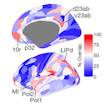
Stefano Panzeri and colleagues used neuroimaging-derived measures to assess the sex differential impact of excitation/inhibition imbalance in idiopathic ASD.

Graeme Davis and colleagues showed that ASD risk genes genetically interact with a class of common modifiers of presynaptic homeostatic plasticity at the Drosophila neuromuscular junction.

Grants awarded through this RFA are intended to provide early support for exploratory ideas, particularly those with novel hypotheses for autism. Appropriate projects for this mechanism include those considered higher risk with less assurance of ultimate impact, but with the potential for transformative results. Investigators new to the field of autism are encouraged to apply for these awards.