SFARI Winter 2019 Pilot awardees announced
SFARI is pleased to announce that it intends to fund 15 grants in response to the Winter 2019 Pilot Award request for applications (RFA).
SFARI is pleased to announce that it intends to fund 15 grants in response to the Winter 2019 Pilot Award request for applications (RFA).

On September 25, 2018, SFARI convened a workshop with the aims of discussing current research on sensory processing in autism and bringing together investigators that conduct animal- and human-based studies to foster opportunities for translational research.

Catharine Rankin completed bachelor’s and master’s degrees in psychology at the University of Guelph, and a doctorate in biopsychology at the City University of New York. Following her graduate work, she did postdoctoral research focused on the development of learning in the marine mollusk Aplysia with Thomas Carew at Yale University before joining the faculty of the Department of Psychology at the University of British Columbia, where she is currently a full professor.

On June 22, 2019, families of people with DYRK1A syndrome gathered in Seattle to support one another and meet with researchers. A rare condition resulting from mutations to the kinase-encoding gene DYRK1A, the syndrome is associated with anomalous brain development and a range of symptoms, including microcephaly, seizures, speech delay and autism.
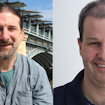
Peter Kind and Loren Frank discuss their work using SFARI’s genetic rat models and their views on how these models will aid autism research.
SFARI is pleased to announce that eight Director Awards were awarded in 2020. These projects include, but are not limited to, studies that aim to enhance existing SFARI-sponsored cohorts and collections, generate novel resources (e.g., animal models) and studies whose goals are beyond the focus of existing SFARI request for applications.

SFARI Investigator Aakanksha Singhvi discusses her lab’s work and how the Bridge to Independence Award helped in her transition to working as an assistant professor.
Simon Chen and colleagues found that a reduction in locus-coeruleus noradrenaline neuromodulatory signaling contributes to altered motor learning in 16p11.2 deletion mice.

Tesar joined the faculty at CWRU in 2010 and is currently the Dr. Donald and Ruth Weber Goodman Professor of Innovative Therapeutics at CWRU School of Medicine. His laboratory has pioneered new regenerative approaches to treat myelin disorders of the central nervous system, including multiple sclerosis, neuromyelitis optica, pediatric leukodystrophies, cerebral palsy and brain cancer.