
A Conversation with SFARI Investigator Liqun Luo
SFARI Investigator Liqun Luo discusses the neurodevelopmental disorder Smith-Magenis syndrome and his lab’s efforts to understand its underlying biology.
SFARI Investigator Liqun Luo discusses the neurodevelopmental disorder Smith-Magenis syndrome and his lab’s efforts to understand its underlying biology.
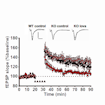
Peter Kind and colleagues show that brief treatment with lovastatin results in sustained correction of physiological and behavioral deficits in a rat model of fragile X syndrome.

On 12 and 13 June, the Simons Foundation Autism Research Initiative (SFARI) held its second workshop on 16p11.2 deletion and duplication. A total of 62 participants from across the U.S. and Europe attended the meeting.
SFARI hosted a virtual workshop on March 14 and 18, 2022, to discuss the best practices for the development and use of induced pluripotent stem (iPS) cell models for autism research, including iPS cells generated from SFARI autism cohorts.

This issue of the SFARI newsletter includes: (1) SFARI 2016 Bridge to Independence Award finalists announced, (2) SFARI 2016 Explorer awardees announced, (3) Simons Variation in Individuals Project (Simons VIP): New data available, (4) SFARI Gene: New data available, (5) Highlights of SFARI-funded research, (6) Upcoming lecture: Arnold Kriegstein, “Genomic insights into human cortical development and neurodevelopmental disease”, (7) Upcoming lecture: Mark Zylka, “Exploiting genetics to identify environmental risks for autism”.

On June 14, 2019, Alistair Ward and Chase Miller will introduce SFARI Viewer and show how this online platform can be used to visualize and analyze genomic and phenotypic data from the SSC and SPARK.
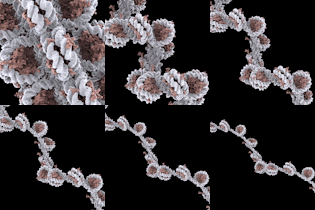
On April 17, 2018, molecular neuroscientists and geneticists gathered at the Simons Foundation for a workshop on the role of chromatin-associated proteins in autism spectrum disorder. The workshop discussed the biology and function of these proteins in brain development, while considering translational opportunities and evaluating ways that SFARI could potentially help move research in this area forward.
This issue of the SFARI newsletter includes: (1) SFARI 2020 Research awardees, (2) SFARI’s response to appeals for racial justice in science and society, (3) SPARK update: New phenotypic data now available, (4) SFARI Gene: New data release, (5) Requesting SFARI data and biospecimens during COVID-19 pandemic, (6) SFARI abstracts and e-posters at INSAR 2020 Virtual, (7) SFARI Investigator and board member elected to the National Academy of Sciences, (8) SFARI Investigators and board member elected to the American Academy of Arts & Sciences, (9) Workshop report: SFARI workshop explores challenges and opportunities of gene therapies for autism spectrum disorder, (10) Highlights of SFARI-funded research, (11) Past webinar: Allyson Berent, “From parent advocate to nonprofit chief science officer, to biotherapeutic company cofounder — A personal journey through drug development for Angelman syndrome.”
On May 15, 2018, SFARI convened a workshop to revisit the excitation/inhibition (E/I) hypothesis of autism, a synaptic-based account of the disorder that has been highly influential in the last fifteen years of autism research. The workshop critically evaluated the E/I hypothesis in light of the current knowledge of autism pathophysiology and called for a more precise definition of the hypothesis that can help enable translational opportunities from animal- to human-based research.
The SFARI team is pleased to announce the launch of SFARI Gene, a new online tool for autism researchers.