SFARI Aids in Mouse Model Availability
Mouse models provide an essential platform for studying the neural circuits underlying autism spectrum disorders.
Mouse models provide an essential platform for studying the neural circuits underlying autism spectrum disorders.
Yehezkel Ben-Ari and his colleagues at the Institut de Neurobiologie de la Méditerranée (Inmed) in Marseille, France, showed several years ago that neurons recorded in newly born animals have elevated intracellular chloride, leading to paradoxical excitatory actions of the principal adult inhibitory transmitter gamma-aminobutyric acid (GABA)[ref]Ben-Ari Y. et al. Physiol. Rev. 87, 1215-1284 (2007) PubMed[/ref]. They showed an abrupt and brief decrease in intracellular chloride in central neurons recorded immediately after birth[ref]Tyzio R. et al. Science 314, 1788-1792 (2006) PubMed[/ref]. This shift is associated with an abrupt excitatory-to-inhibitory shift of the actions of GABA that is mediated by the hormone oxytocin, which also triggers labor.

Marta Benedetti joined the Simons Foundation in 2007 and works with the SFARI team to evaluate and manage the SFARI autism grant portfolio, with particular emphasis on grants in the area of molecular and cellular biology.
SFARI launched a request for applications in early 2015 that sought proposals to develop medium- and high-throughput screens to test the functional effects of de novo missense variants identified in the Simons Simplex Collection and other autism cohorts. Here, SFARI Senior Scientist Alan Packer discusses the proposals that were selected for funding as well as highlighting recent papers that have provided functional evidence for missense variants contributing to autism and other disorders.

This blog post accompanies the “SFARI’s 2017 funding priorities” post. In it, the SFARI science team discusses the application and review process for Pilot and Research Awards.

In a milestone for the autism research community, SFARI has finished recruiting families to participate in the Simons Simplex Collection (SSC). The foundation has now shifted from recruitment of these families to supporting their continued participation in future research studies.
Autism is a developmental disorder that is most likely triggered during prenatal or early postnatal life. Yehezkel Ben‐Ari and his colleagues at the Mediterranean Institute of Neurobiology and the pharmaceutical company Neurochlore, in France, aim to identify the earliest signals of autism that can be detected in the operation of developing brain networks.

SFARI held its sixth annual meeting, bringing together some 150 SFARI-supported autism researchers in an effort to advance the understanding of autism, improve its diagnosis and better the experience of those on the autism spectrum.
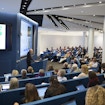
SFARI held its thirteenth science meeting April 8–12, 2018. SFARI investigators, collaborators and foundation staff came together to discuss recent findings in autism genetics, molecular and system-level mechanisms, and clinical studies. In addition to keynote and session presentations, two panels convened investigators to discuss the current state of autism genetics research and the biology of SCN2A, a high-confidence autism risk gene.