Alessandro Gozzi and colleagues found that Shank3-deficient mice have disrupted frontocortical functional connectivity, which is associated with impaired communication and social behaviors.
Highlights of SFARI-funded papers, selected by the SFARI science team.

Alessandro Gozzi and colleagues found that Shank3-deficient mice have disrupted frontocortical functional connectivity, which is associated with impaired communication and social behaviors.

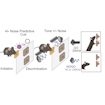
Kevin Bender, Stephan Sanders and colleagues show that there is an unexpectedly critical role for the autism risk gene Scn2a, which encodes the sodium channel NaV1.2, in postnatal dendritic excitability and synaptic function in mice.

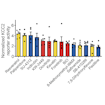
Paul Sternberg and colleagues establish an initial pipeline in C. elegans to screen autism-associated missense mutations for functional effects.

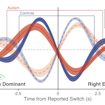
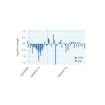
Susan Bookheimer and colleagues show that the degree of sensory overresponsivity in individuals with autism may be driven by distinct patterns of connectivity between the prefrontal cortex and amygdala.

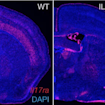
Anthony-Samuel LaMantia, Thomas Maynard and colleagues show that a mouse model of 22q11.2 deletion syndrome has fewer long-distance cortico-cortical connections, which is caused in part by mitochondrial dysfunction.

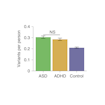
Two studies from Brigitta Monz, Richard Houghton and colleagues provide examples of the effectiveness of SPARK’s research match program to rapidly recruit thousands of individuals for the large-scale testing of research questions.

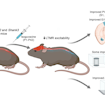
Peter Kind and colleagues show that brief treatment with lovastatin results in sustained correction of physiological and behavioral deficits in a rat model of fragile X syndrome.

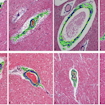
Using single-nucleus RNA sequencing of postmortem cortical tissue from individuals with ASD, Arnold Kriegstein and colleagues identify upper-layer excitatory neurons and microglia as key cell types affected in ASD.