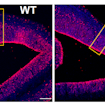
SFARI Investigator Susanne Schmid and colleagues showed that loss of Cntnap2 in rats leads to immature-like delays in auditory cortex sound processing and overactive auditory neurons.
Research Highlights
Ivan Iossifov, Michael Wigler and colleagues provided a detailed comparison of simplex and multiplex families with autism, supporting the view that de novo mutations are a more frequent cause of autism in low- than in high-risk families.
Anna Penn and colleagues showed that loss of the supply of the hormone allopregnanolone (ALLO) from the placenta leads to cerebellar brain and behavioral deficits in male offspring.
SFARI Investigators Lilia Iakoucheva and Alysson Muotri and colleagues utilized 3D organoid brain cultures to demonstrate how defects in neuron migration are affected in 16p11.2 deletion and duplication conditions.
SFARI Investigator Bruce Herring and colleagues showed that ASD-linked mutations in Trio and NLGN1 cause deficits in synapse development and function.
Hisashi Umemori and colleagues showed that X-inactivation-based patchy expression of PCDH19 causes defects in presynaptic development and signaling in the mouse hippocampus, affecting memory processes.
Bence Ölveczky, Jesse Marshall and colleagues developed a new method, CAPTURE, for long-term behavioral tracking in rodents and demonstrate its utility in tracking behaviors in Fmr1-KO rats.

Olga Troyanskaya and colleagues developed a bioinformatics framework for the identification and prioritization of disease-associated enhancers.
Simon Chen and colleagues found that a reduction in locus-coeruleus noradrenaline neuromodulatory signaling contributes to altered motor learning in 16p11.2 deletion mice.

Lilia Iakoucheva and colleagues found that mice lacking a copy of the high-confidence ASD risk gene Cul3 have reduced brain volumes, potentially due to defects in Rho signaling during brain development.
- Previous Page
- Viewing
- Next Page