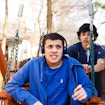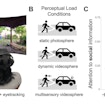
A study by Caroline Robertson and her colleagues found that reduced social attention was not a static omnipresent characteristic of autism; rather, it was magnified only under certain real-world conditions where sensory processing demands were high.

A study by Caroline Robertson and her colleagues found that reduced social attention was not a static omnipresent characteristic of autism; rather, it was magnified only under certain real-world conditions where sensory processing demands were high.

This issue of the SFARI newsletter includes: (1) SFARI Research Math, (2) Simons Foundation seeks proposals for new neuroscience collaborations, (3) Simons Searchlight gathers families and researchers for conference on CSNK2A1– and SETBP1–related conditions, (4) New Spectrum book showcases the scientists studying the biology of autism, (5) Event: Informational session: Cross-Species Studies of ASD request for applications (RFA), (6) Highlights of SFARI-funded research, (7) Bridge to Independence Award — Request for applications.

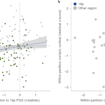
Elise Robinson and colleagues identified a large genomic region — chromosome 16p — where a rare 16p11.2 variant associated with autism functionally converges with common polygenic variation across 16p. Both rare and common genetic variation at 16p decreased expression of neuronally expressed genes, with relevance for increasing autism risk.

New Simons Searchlight data were recently added to SFARI Base. The data released included phenotypic data from individuals with 16p11.2 copy number variant (CNVs), 1q21.1 CNVs, 7q11.23 duplication and variants in 32 single genes associated with autism and related neurodevelopmental conditions.

Phenotypic data from 310,649 participants enrolled in SPARK, including 123,444 individuals with ASD, are now available to approved researchers. Genomic data (whole-exome sequencing and genome-wide genotyping data) are also available for 81,172 SPARK participants. Of these, 3,568 genomes and 34,164 exomes are from individuals with ASD.

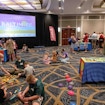
On August 4, 2022, SFARI and Simons Searchlight helped to host two scientific workshops focused on neurodevelopmental disorders (NDDs) that are linked to mutations in the CSNK2A1 and SETBP1 genes. Meeting in Baltimore, the workshops were held in conjunction with a family conference that gathered together people with these conditions and their family members.

This issue of the SFARI newsletter includes: (1) Updates to SFARI’s Requests for Grant Applications for 2023, (2) Important Changes to the Independence Award Program, (3) 2022 SFARI Human Cognitive and Behavioral Science Awardees Announced, (4) Event: Simons Foundation Autism and Neuroscience Social at SfN 2022, (5) 2023 Winter Pilot Award – Request for Applications.

SFARI is pleased to announce that it intends to award ten grants in response to the 2022 Human Cognitive and Behavioral Science request for applications.

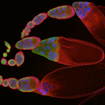
Studies by two different research teams — one led by Ethan Greenblatt and the other by Emily Osterweil — both suggest that FXS cells under-synthesize large proteins, findings that suggest a new point of view on a fundamental problem.

To further our goal of funding the best and most transformative research on autism, SFARI strives to strike a balance between open requests for grant applications (RFAs) on any autism-related topic and more targeted RFAs focused on top priorities identified by SFARI. In 2023, we will hold two calls for Pilot Awards and will reissue the Human Cognitive and Behavioral Science RFA and the Genomics of ASD RFA. We will also issue a call for projects that integrate the study of ASD-relevant behaviors across human and non-human species.