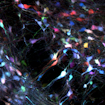
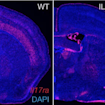
Gloria Choi, Jun Huh and colleagues showed that postnatal administration of IL-17a can rescue some of the anatomical and behavioral deficits observed in a maternal immune activation (MIA) mouse model of autism spectrum disorder.

Gloria Choi, Jun Huh and colleagues showed that postnatal administration of IL-17a can rescue some of the anatomical and behavioral deficits observed in a maternal immune activation (MIA) mouse model of autism spectrum disorder.

SFARI is pleased to announce that 10 Director Awards were awarded in 2019. These projects include, but are not limited to, studies that aim to enhance existing SFARI-sponsored cohorts and collections, generate novel resources (e.g., animal models) or did not fit into an existing investigator-initiated request for applications.

On June 22, 2019, families of people with DYRK1A syndrome gathered in Seattle to support one another and meet with researchers. A rare condition resulting from mutations to the kinase-encoding gene DYRK1A, the syndrome is associated with anomalous brain development and a range of symptoms, including microcephaly, seizures, speech delay and autism.

This issue of the SFARI newsletter includes: (1) 2020 SFARI Collaboration on Sex Differences in Autism — Request for applications, (2) New changes implemented to SFARI Gene, (3) 2019 Bridge to Independence Award fellow, (4) SFARI funds to support diversity at Gordon Research Conferences, (5) SFARI meeting report: Seeing through a forest of SCN2A gene variation, (6) SFARI meeting report: Bridge to Independence fellows meeting highlights research findings and plans of the next generation of SFARI autism scientists, (7) Highlights of SFARI-funded research, (8) 2020 Bridge to Independence Award — Request for Applications, (9) Summer 2020 Pilot Award – Request for Applications, (10) Past lecture: Jason Lerch, “Autism, Autisms or Neurodevelopmental Disorders?”
SFARI has recently implemented a number of changes to SFARI Gene, including modification of the gene scoring, copy number variant, animal models and protein interaction modules. Curation of the human gene module will continue as before.

Michael Halassa, Guoping Feng and colleagues identified a combinatorial strategy to reverse noise hypersensitivity in Ptchd1 knockout mice, while Stephen Scherer, James Ellis and colleagues separately explored the genetic and functional complexity of PTCHD1 in humans.

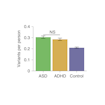
Mark Daly and colleagues used an exome sequencing data set of ASD and ADHD to identify a similar profile of rare protein-truncating variants in each disorder.

On August 2–3, 2019, people from around the world met in Seattle, Washington, to review recent findings about mutations to the sodium channel encoded by SCN2A. Organized by the FamilieSCN2A Foundation, the meeting hosted scientists as well as families of people affected by SCN2A mutations.

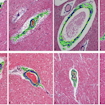
A study from Matthew Anderson and colleagues identified an excess of T-lymphocytes in the postmortem ASD brain, which are prominently associated with astrocytes.

SFARI announces that it has selected five fellows in response to the 2019 Bridge to Independence Award request for applications.