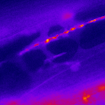
Graeme Davis and colleagues showed that ASD risk genes genetically interact with a class of common modifiers of presynaptic homeostatic plasticity at the Drosophila neuromuscular junction.

Graeme Davis and colleagues showed that ASD risk genes genetically interact with a class of common modifiers of presynaptic homeostatic plasticity at the Drosophila neuromuscular junction.

Grants awarded through this RFA are intended to provide early support for exploratory ideas, particularly those with novel hypotheses for autism. Appropriate projects for this mechanism include those considered higher risk with less assurance of ultimate impact, but with the potential for transformative results. Investigators new to the field of autism are encouraged to apply for these awards.

This issue of the SFARI newsletter includes: (1) SFARI Summer 2020 Pilot awardees, (2) SPARK update: New phenotypic data now available, (3) Simons Searchlight: Research matching program launched, (4) SFARI Gene: January 2021 data release, (5) SfN Global Connectome: Presentations by SFARI Investigators, (6) SFARI Bridge to Independence fellows discuss new research findings and career challenges at virtual retreat, (7) SFARI blog: Alice Luo Clayton, “SFARI Bridge to Independence Award program: Looking back, looking forward”, (8) Highlights of SFARI-funded research, (9) 2021 Bridge to Independence Award— Request for applications, (10) Maternal COVID-19 as a Potential Risk for Autism: Supplemental Funding for Ongoing Pregnancy cohorts – Request for applications, (11) SPARK Research Match Diversity, Equity and Inclusivity – Request for applications, (12) SFARI Supplement to Enhance Equity and Diversity (SEED) — Request for applications, (13) Upcoming lecture: Elizabeth Berry-Kravis, “Clinical trials and cyclic AMP in fragile X syndrome: A life journey.”

SFARI announces the 2021 Human Cognitive and Behavioral Science RFA, a new funding opportunity that prioritizes science that produces foundational knowledge about the neurobehavioral differences associated with autism and directly informs the development or refinement of tools for translational efforts, such as biomarkers and outcome measures.

SFARI’s requests for grant applications (RFAs) will be undergoing a number of changes in 2021. These changes include the introduction of the new Human Cognitive and Behavioral Science RFA, a single call for Pilot Awards, the suspension of the Research Award RFA and the launch of several targeted funding initiatives.

In this blog, Alice Luo Clayton assesses the first five years of the SFARI Bridge to Independence Award program, the impact the award has had on the fellows’ careers and the directions in which the program is moving forward.

SFARI is pleased to announce that it intends to fund 19 grants in response to the Summer 2020 Pilot Award request for applications.

Phenotypic data from 251,082 participants enrolled in SPARK, including more than 99,000 individuals with ASD, are now available to approved researchers.

New data were recently added to SFARI Gene. This data release included the addition of new genes associated with autism risk, new curated references of copy number variations associated with autism and new mouse models of autism.

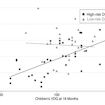
Charles Nelson, Helen Tager-Flusberg and colleagues assessed language development in infants at high risk and low risk of ASD. They reported parental mean length of utterance as a possible difference in the high-risk group.