Mouse models
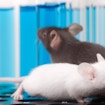
SFARI is helping to make mouse models of high-risk autism genes and copy number variants available to the research community.
SFARI is helping to make mouse models of high-risk autism genes and copy number variants available to the research community.
New genetic variants that increase susceptibility to autism are emerging at a rapid pace. Given the profusion of data, it seems timely to assess the availability and usefulness of mouse models in which to study these genetic risk factors.

The activation of extracellular signal-related kinase (ERK), a key enzyme in cellular signaling, may prove to be a useful biomarker in autism, as an aid in early diagnosis, a predictor of treatment response, and perhaps as a predictor of long-term outcomes. ERK is being used as a biomarker in fragile X syndrome because ERK activation is delayed in blood samples of people with the disorder, compared with controls.

Inflammatory mechanisms have been implicated in autism. Treatments that modulate the immune system and inflammatory response, such as Trichuris suis ova (TSO), a parasitic worm called whipworm helminth, may be an experimental therapeutic option. Individuals with autism may have an increased immune response due to excess type 1 T-helper cells, which increases chronic inflammation. Individuals with autism may also have less of anti-inflammatory cytokines released by type 2 T-helper cells, which decreases chronic inflammation. It has been noted that some individuals with autism have improvements in behavioral symptoms when they have a fever, which further suggests that factors that influence the immune system and inflammation may have a role in autism etiology and potential treatments.
The deletion of 27 genes in the 16p11.2 chromosomal region is associated with autism spectrum disorders, intellectual disability and obesity. To study the underlying cellular, molecular and anatomical basis of autism, Ricardo Dolmetsch and his colleagues at Stanford University in California have generated a mouse that lacks the same 27 genes on a corresponding chromosome in the mouse genome. Their goal, in collaboration with Jacqueline Crawley’s lab, is to characterize the neuroanatomical, neurophysiological and behavioral features of these mice.

Researchers can use biomarkers to diagnose individuals with autism and to hone in on the underlying causes of the disorder. In July, SFARI held an informal meeting of minds at Stony Brook University to discuss biomarkers for autism.
Individuals with autism have deficits in social and emotional learning. The amygdala, a region of the brain involved in orchestrating emotion and emotional memory, is affected in individuals with autism. The nature of the dysfunction is not well characterized, however. Eric Kandel, Yun-Beom Choi, Craig Bailey and their colleagues at Columbia University Medical Center aim to examine the role of an autism-implicated protein, neurexin, at synapses in the amygdala. They also plan to investigate how neurexin is involved in fear memory, a function that is associated with the amygdala.
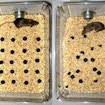
Researchers need reliable methods to interpret autism candidate genes, including rodent models to assess the impact of genes on behavior. On 4 February, SFARI hosted a workshop to discuss the role of mouse models and behavioral assays in autism research. The participants concluded that the field should invest in techniques that can be standardized across laboratories and emphasized the importance of mouse models for identifying biomarkers and testing therapies.
Copy number variants (CNVs) are segments of DNA that vary in copy number between different individuals. CNVs confer significant risk of neuropsychiatric disorders, including autism and schizophrenia. Notably, there appears to be a reciprocal relationship between copy number and brain size for certain genetic loci. For example, deletions of the genomic region 16p11.2 tend to be associated with autism and increased head circumference, whereas duplications of the same segment tend to be associated with schizophrenia and smaller head circumference. The contrasting clinical phenotypes that are associated with reciprocal changes in gene dosage could represent opposite extremes of the same neurodevelopmental process.
The unusually high incidence of cranial and facial anomalies among people with autism may provide insight into the underlying biology of the disorder. Curtis Deutsch of the Eunice Kennedy Shriver Center at the University of Massachusetts Medical School and his colleagues are evaluating these anomalies using new, state-of-the-art imaging technology.