Neuroscience 2021: Presentations by SFARI Investigators
A number of presentations will be given by SFARI Investigators at Neuroscience 2021 (November 8–11).
A number of presentations will be given by SFARI Investigators at Neuroscience 2021 (November 8–11).
SFARI is pleased to announce that it intends to fund 17 grants in response to the 2021 Genomics of ASD: Pathways to Genetic Therapies request for applications.
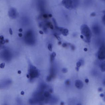
Autism BrainNet is working to digitize the Autism Celloidin Library, a unique collection of 28 celloidin-embedded, Nissl-stained brains from donors with and without autism spectrum disorder. The collection provides a unique resource for histological studies aimed at quantifying and characterizing changes in cell distribution, size and regional structure. Digitized images will be available to interested researchers upon request.

The Bridge to Independence Award program serves as an overall scientific support system to help early-career scientists successfully launch their independent research positions. Fellows receive a commitment of $495,000 over three years, activated upon assumption of a tenure-track professorship, as well as a designated $10,000 gift for professional development activities to be spent during the transition year.
Helen Bateup and colleagues showed that a loss of Tsc1 from striatal direct pathway neurons altered synaptic function and enhanced motor routine learning in mice. These findings suggest that changes in select types of striatal neurons may underlie altered motor behaviors in individuals with tuberous sclerosis complex and autism.
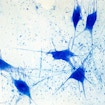
SFARI is pleased to announce that it intends to fund four grants in response to the request for applications (RFA) focused on the analysis of postmortem brain tissue from the Autism BrainNet collection.
On February 10, 2023, SFARI hosted an in-person meeting focused on measuring sensory system function in humans with autism spectrum disorder (ASD) and other neurodevelopmental disorders (NDD).

The Simons Foundation Autism Research Initiative (SFARI) is pleased to announce the release of data collected from its Simons Sleep Project (SSP), a study aimed at accelerating research into sleep and daily behaviors in individuals with autism. The SSP engaged more than 100 adolescent participants with autism and their non-affected siblings and collected more than 3,000 nights’ worth of data.

Social behavior is a complex and dynamic process shaped by movement, coordination and physical touch. A new study in Cell written by members of SFARI's Autism Rat Consortium introduces s-DANNCE, a machine-learning system that can map the fine-scale movements of freely interacting rats in three dimensions. By applying s-DANNCE to seven genetic rat models of autism, researchers have uncovered distinct social phenotypes, offering new insights into the diversity of autism-related behaviors.

Simons Searchlight offers open-source data and tools to researchers worldwide who study autism and related neurodevelopmental conditions.