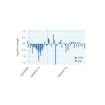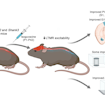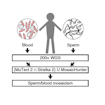
Joseph Gleeson and colleagues used deep whole-genome sequencing and genotyping of sperm DNA to stratify ASD risk in offspring due to de novo mutation.
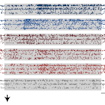
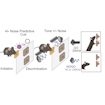
Joseph Gleeson and colleagues used deep whole-genome sequencing and genotyping of sperm DNA to stratify ASD risk in offspring due to de novo mutation.
Ofer Yizhar and colleagues described the altered dynamics of social representation in neurons of the medial prefrontal cortex of Cntnap2-null mice, a model of autism spectrum disorder.

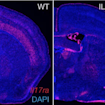
Gloria Choi, Jun Huh and colleagues showed that postnatal administration of IL-17a can rescue some of the anatomical and behavioral deficits observed in a maternal immune activation (MIA) mouse model of autism spectrum disorder.

Michael Halassa, Guoping Feng and colleagues identified a combinatorial strategy to reverse noise hypersensitivity in Ptchd1 knockout mice, while Stephen Scherer, James Ellis and colleagues separately explored the genetic and functional complexity of PTCHD1 in humans.

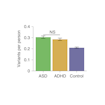
Mark Daly and colleagues used an exome sequencing data set of ASD and ADHD to identify a similar profile of rare protein-truncating variants in each disorder.

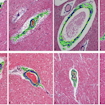
A study from Matthew Anderson and colleagues identified an excess of T-lymphocytes in the postmortem ASD brain, which are prominently associated with astrocytes.

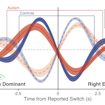
Caroline Robertson and colleagues developed a novel paradigm that provided direct neural evidence for slower binocular rivalry in autism. They also demonstrated a causal link between GABAergic inhibition and rivalry in neurotypical individuals, suggesting that this tool may serve as a noninvasive marker of inhibitory signaling in the brain.

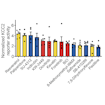
Three recent studies – two by Kristopher Kahle and Igor Medina, and the third by Xin Tang, Mriganka Sur and Rudolf Jaenisch – explored regulatory mechanisms that modulate KCC2 function during development as well as ways to potentially therapeutically enhance the expression of this chloride cotransporter.

Daniel Geschwind, Michael Gandal and colleagues reported that allelic imbalance in gene expression in ASD shows a surprising preference for the minor allele and implicates a family of snoRNAs at 15q11-13.

David Ginty and colleagues have identified mechanisms through which peripheral loss of ASD-associated genes affect behaviors in mice and identify a potential peripherally restricted therapy to treat tactile over-reactivity and select ASD-related behaviors.