Research

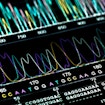
Cryptic chromosomal aberrations and autism

Chromosomal microarray (CMA) analysis to detect copy number variations (CNVs) —duplication or deletion of chromosomal regions — is the recommended first-tier diagnostic screen for autism, and studies of structural variation (SV) to date have largely focused on CNV detection and interpretation. Copy-neutral SVs, or balanced chromosomal abnormalities (BCAs), have not been systematically surveyed in autism, suggesting that these rearrangements could represent a potent class of loss-of-function mutations that have not yet been characterized in autism.

Characterizing autism-related intellectual impairment and its genetic mechanisms

Although intellectual impairment is not one of the diagnostic criteria for autism spectrum disorders, half or more of all people with autism have an intellectual disability. Intellectual disability can present an equal or greater challenge to individuals with autism than do autism-specific deficits. To date, the intelligence quotient (IQ) is one of the best predictors of response to treatment among youth with autism, and it is also one of the best predictors of long-term outcomes.

Genetic model to study A2BP1 and its target, PAC1

Autism encompasses a range of cognitive and behavioral characteristics, and studies suggest that certain genetic abnormalities are common in individuals with autism. A major challenge is to link these genetic abnormalities with the behavioral features of autism, such as social deficits and anxiety. Gil Levkowitz and his colleagues are tackling basic questions concerning the development and function of the hypothalamus, an important yet understudied brain region.

Circuits Image
Synaptic pathophysiology of 16p11.2 model mice

Many single-gene disorders linked to autism affect proteins that modulate the translation of messenger RNA into proteins that function at synapses, the junctions between neurons. A few examples are FMRP in fragile X syndrome, TSC1 and TSC2 in tuberous sclerosis complex and PTEN in Cowden syndrome. This led Mark Bear at the Massachusetts Institute of Technology and Raymond Kelleher at Massachusetts General Hospital to propose that ‘troubled translation’ is a core pathophysiological mechanism underlying autism spectrum disorders.

  • Previous Page
  • Viewing
  • Next Page
Subscribe to our newsletter and receive SFARI funding announcements and news

privacy consent banner

Privacy preference

We use cookies to provide you with the best online experience. By clicking "Accept All," you help us understand how our site is used and enhance its performance. You can change your choice at any time here. To learn more, please visit our Privacy Policy.