
FENS Forum 2018: Presentations by SFARI Investigators
SFARI Investigators will be giving a number of presentations at the 11th FENS Forum of Neuroscience in Berlin, Germany (July 7-11).
SFARI Investigators will be giving a number of presentations at the 11th FENS Forum of Neuroscience in Berlin, Germany (July 7-11).

Two SFARI Investigators are among the 84 newly elected members of the National Academy of Sciences.
SFARI Investigators and SFARI science staff will be giving a number of oral presentations at the International Society for Autism Research (INSAR) 2018 Annual Meeting in Rotterdam, Netherlands (May 9-12).
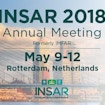
SFARI science staff will be presenting a number of posters about SFARI projects and resources at the International Society for Autism Research (INSAR) 2018 Annual Meeting in Rotterdam, Netherlands (May 9-12).
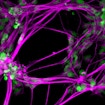
SFARI is soliciting your feedback about the utility and priority of induced pluripotent (iPS) cells from individuals with high-confidence autism risk variants. Your comments will help us to create a research infrastructure that will allow the use of SFARI biospecimen resources in the most impactful way.
Six current and former SFARI Investigators are among the 213 newly elected members of the American Academy of Arts & Sciences, one of the nation’s oldest and most prestigious honorary societies.
New data were added to SFARI Gene in April 2018. This data release included updated gene scores for candidate autism risk genes, as well as the addition of new genes, animal models, and copy number variant loci associated with autism.

New Simons VIP Phase 2 data were recently added to SFARI Base. This data release included data from individuals with 16p11.2 copy number variants (CNVs), 1q21.1 CNVs and mutations in the following single genes: ADNP, ASXL3, DYRK1A, FOXP1, GRIN2B, HIVEP2, MED13L, PACS1, PPP2R5D, SCN2A, SETBP1, STXBP1 and SYNGAP1.